
‘Your Karl Marx still believes in letting natural forces take their course. No politics, no conspiracies, am I right? Everything out in the open, and nothing to fight for but wage rises … To hell with you and your gradual evolution! Set fire to every town and city, cut the populace to shreds, raze everything to the ground, and when there’s nothing left of this whole, vile world, maybe a better one will grow up in its place.’
Gothic studies has taken to nineteenth century literature with deep enthusiasm, delving into the cultural imagination of the era to show that it is irreducibly haunted. If, in many ways, we are still Victorian, we too are haunted in just the same ways. Yet, despite everything there is a strange absence in typical or canonical gothic genealogies of the literature of the nineteenth century – the presence of Emile Zola. Partly, of course, this is a problem of identification: Zola insists in his introductions, letters and essays that he is a naturalist – a literary scientist there simply to observe the conditions, language and psychology of his characters. As a result then Zola, and particularly his twenty volume novel series Les Rougon-Macquart produced between 1871 to 1893 tends to be placed in the wider tradition of European realism. Credit for this probably rests predominantly with Gyorgy Lukacs, who wrote extensively on Zola and saw him as one of the great bourgeois realists of the European novel.
Yet despite the all-too-easy confluence between naturalism and realism, Zola’s interest in issues of inheritance and degeneration, as well as his penchant for the occasional lurid or melodramatic plot contrivance places him in close proximity to the concerns of Gothic and horror writers in the late nineteenth century. The atavism of Hyde, the degeneration and depravity of Dorian Gray, and the scientific theories of Lombroso are not that far removed from Zola’s own sociological and political engagement with French society. The Rougon-Macquart series is full of examples that destabilize the conception of Zola as a straightforward realist. One need only think of the incestuous libidinal economy of La Curée (1871), wherein desire moves between financial excess and sexual lust, set against the background of corruption through the Haussmannization of Paris. Think of the violence and psychopathy of La Bête Humaine (1890) driven by the relentless creative destruction of that emblem of modernity, the railway. Or, take the horrific violence of one of the final novels of the series, La Débâcle, (1892) set during the Franco-Prussian war and the bloody days of the Paris commune in which Paris itself descends into fire, blood and death. For Zola, the Second Empire is degenerating, moving inexorably towards entropy and violence. His characters’ own flaws and limitations allegorize wider shifts in the social and political totality, meaning that the world of the novel series is haunted by its own inevitable collapse.
Reading the gothic and Horror elements of Zola’s work raises complex questions about the political utility and function of horror and the ways in which Zola understands the interactions between nature and society. In short, in Zola we can find a deeply political class consciousness even if ultimately he remains, as Lukacs points out in his Studies on European Realism, prone to a kind of biological mysticism. The Rougon-Macquart series subtitle explains Zola’s intentions — a “Natural and social history of a family under the Second Empire.” In contrast to a writer like Balzac, Zola aimed not to mirror an entire society but to trace the fortunes and struggles of a single family through the decline and fall of the French Empire from the coup-d’etat to the birth of the Third Republic.
Thus, what I want to do here is sketch out two central claims. Firstly, that Zola can be productively thought of as a Gothic writer and doing so allows for a broader understanding of the innovation of naturalism, its relationship to history, and the development of the Gothic in the nineteenth century. Reorienting Zola as part of the Gothic allows for a more thorough understanding of how the form developed in European culture especially given the reception and influence of Zola on other European novelists, many of whom would go on to write gothic and horror pieces.. Horror develops out of a combination of the bourgeois’ panicked reaction to the violence of the French revolution, in combination with the German Schauerroman on the one side and English middle-class reaction on the other. After all, Burke (famous for the aesthetic distinction between the sublime and the beautiful that so much of the early Gothic rests upon) and Wollstonecraft (mother of Mary Shelley) both wrote about the French revolution. Additionally, English fears of European political radicalism runs through much of the anti-Catholicism of early Gothic novels (as pointed out by Gothic scholars like Diane Hoeveler and Angela Wright in their work on the 18th & 19th century Gothic).
The second claim is to put the first claim into practice. Zola’s thirteenth novel of the series, Germinal, is widely regarded as one of the high points of the whole series. Taking this novel as an eco-Gothic text – or perhaps even an eco-Horror one – allows for a productive reading of the connections between politics, nature and subjectivity. In the novel, the mediating third point between human subjectivity on one side and the world of nature on the other is human action – or, more directly, human labor performed by an exploited working class. Rather than posit the natural world as a site of horror which is experienced by human beings or that the natural world is haunted by something beyond humanity, Germinal shows that human labor is the point at which subjectivity and nature collide in a series of complex entanglements. The natural world is the site of wealth extraction but this wealth is generated at both the cost of nature and the spilt blood of the working classes. When the Montsou mine rises in strikes and the mine itself collapses, Zola’s naturalism shows what David Baguely referred to as his “entropic vision.” Germinal shows us that the Earth is full of coal, but also blood, an ecogothic vision of what exploitative labor does to the web of life that binds classes to certain environments.
As a result, the horror of the eco-gothic is not produced by any intrinsic quality of the geography or geology of Montsou and its mines – rather the horror emerges from the confluence of human subjectivity being already entangled with certain aspects of nature for the development of capitalism. This is an argument which refuses the duality between humans and the natural world, or in other words, the false and rather easy split between nature on one side and culture, (and therefore both politics and the economy) on the other. With the advent and proliferation of what Andreas Malm has called “fossil capital” in the nineteenth century, there is no outside, nature itself is rendered inescapably political and economic.
So, how to place Zola as a Gothic writer? This is certainly part of Zola’s overall literary output – Thérèse Raquin (1868) which was Zola’s third novel but the first to bring him widespread fame. It was, as one infamous review put it, “putrid” – a claim that Zola immediately added to the second edition, (he was always an expert at marketing!) The novel itself is a melodramatic collection of guilt, imprisonment, lust and violence and several of its themes and interests run throughout the Rougon-Macquart series. But the Gothic isn’t simply a matter of aesthetics. Rather, it is precisely in Zola’s naturalism that we can more fully understand the gothic elements in Zola’s work. So, Les Rougon Macquart follows a single family but follows multiple branches. All of this begins with Adélaïde Fouque the familial matriarch. She suffers from periods of melancholia and mental illness, (there’s something rather Radcliffean about her in many ways). She later marries a gardener, Rougon with whom she has a son, Pierre. Following this, she takes a lover, the criminal Macquart. With Macquart she has two further children, Antoine and Ursule. From these children emerge three distinct family lines. The Rougons, avaricious social climbers interested in the accumulation of wealth. The illegitimate Macquarts are prone to violence, petty or serious crime and libidinal excess. There also emerges a middle class line of Mourets, who end up functioning as a kind of dialectical sublimation of the inherited excesses of each branch of the family.
The traits of each branch are all inherited and thus characters within the world of the novel are doubly determined – the course of their lives are determined through their social status and at the same time through the biological or genetic determinism of their heritable traits. In short, if their class determines them as historical subjects within a political-social totality, then hereditary functions as the determinate on the level of subjectivity itself. The characters in Zola’s novels are aware of the ways in which they are not free: haunted and hemmed in existentially by the choices of their own ancestors. The novelist and critic Brandon Taylor, who has done much in the last year or two to bring wider attention to Zola’s novels, wrote in an essay for the LRB that Zola’s naturalism “is the perfect vehicle for expressing the alienation we feel after being commodified under capitalism. If you ignore the eugenicist undertones of the idea that class is biologically determined, and squint a little, you can understand why naturalism has been making a sneaky comeback.”
I would argue then that Zola’s determinism is not strictly speaking scientific determinism, though Taylor is absolutely correct to point out its eugenicist structure. Rather, it is a historical one, in which the past – that which we thought was dead and buried – is revealed to be frighteningly present, a specter haunting the present and shaping us down to the day to day minutiae of our lives. As Walter Benjamin (who remains one of the most under-appreciated theorists of the Gothic as not simply a mode of literature but as a philosophy of history puts it, , “the history that showed things “as they really were” was the strongest narcotic of the century.” In Germinal the historical forces of injustice, of the exploitation of the working classes and the violence unleashed by an intransigent bourgeoisie lead inexorably to violence – and so much of the novel’s latter half shows us Etienne’s own struggles against his own inherited determinism. On a wider level this is a key part of the structure of the whole novel series. Germinal and many other novels of the series find their violent high point in the nightmarish catastrophe of Le Debacle – the commune sought to establish a new kind of history but Zola is writing in a post-Commune moment. He, despite his sympathies for the demands of the working class, knows that too falls to come to pass. For Zola, like Marx, and like the Gothic too, history has its own kind of presence – it is felt, and lived, determining us in ways we cannot help but try to struggle against. To position Zola as a Gothic writer is to accept that, as the famous quote runs, “The past is never dead. It’s not even past”
This is perhaps the very real problem with Souveraine, the anarchist follower of Bakunin. He is deeply uninterested and removed from the day to day concerns of labor struggles, seeing them as distinctly meaningless. For Souveraine, history is something that can be just annihilated no matter the cost, his desire for a new world can only see it’s coming into being through colossal acts of violence. “Blood” as he says, “What does that matter, it’s good for the soul.” Rather than relying on the laws of historical materialism developing out of human action but rather, “by fire, sword and poison, the criminal is the real hero…what we need is a whole succession of horrific attacks that will terrify those in power, and rouse the people from their slumber.” For Zola, (and co-incidentally for Marxists too) this relationship to history is nihilistic and ignores the material conditions all too often inherited by the working classes – in short it is both an excuse and a symptom of a wider social problem
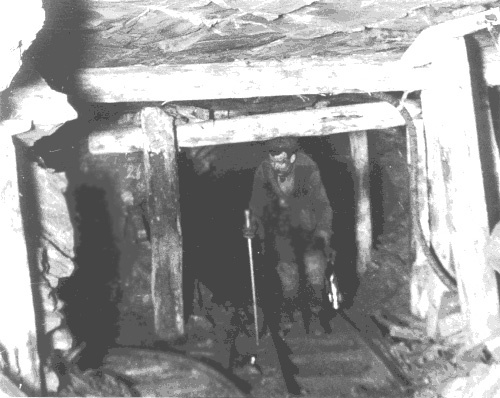
With this as context then, Germinal starts to coalesce as an eco-Gothic novel. The novel follows Etienne Lantier, brother of Jacques Lantier featured in Zola’s earlier novel La Bête Humaine. Both Lantier’s suffer from fits of rage, and the novel starts with Étienne out of a job for attacking his foreman and he arrives in the bleak north of France at the mining town of Montsou. He is in desperate need of a job, he has no food and without finding a job he will starve to death. From the off the landscape is bleak and foreboding, rife with hellish imagery: “Not a single tree blotted the skyline…he saw red fires over to his left.” The fires reveal the Le Voreux mine, overseen by an “apparition” – this is Bonnemort, an almost-retired miner whose name reflects the undead status of the laborers who are forced beneath the earth before their time. In the middle of an empty landscape Etienne can’t help but anthropomorphize the mine as a devouring beast, introducing some ecological and natural metaphors that will run throughout the whole novel:
And yet something made him hesitate, a fear of Le Voreux itself, out here in the middle of this open plain that lay buried in thick darkness. With each gust the force of the wind seemed to increase, as if it were blowing in from some ever-widening horizon. No dawn paled the dead sky; there was only the blaze of the tall blast-furnaces and the coke-ovens, turning the darkness blood red but shining no light into the unknown. And Le Voreux crouching like some evil beast at the bottom of its lair, seemed to hunker down even further, puffing and panting in increasingly deep slow breaths as if it were struggling to digest its meal of human flesh.
Throughout the opening sections of the novel the mine is consistently presented as a haunted state, something monstrous that both eats up humanity and is at the same time consumed by the exploited labor that pulls coal out of the earth. Etienne reflects on this as he completes his first proper shift in the mine, again drawing on a series of natural metaphors.
The gluttonous pit had swallowed its daily ration of men, nearly seven hundred miners who were now at work inside this giant anthill, all burrowing into the earth and riddling it with holes like an old piece of wood being eaten away by woodworm. And in the heavy silence created by the crushing mass of earth it was possible to put an ear to the rock and hear the teeming activity of human insects on the march, from the whir of the cables rising and falling as the cages took the coal to the surface.
One of the important aspects of the early sections of the novel is the ways in which this kind of labor is only understandable as something which makes human beings more animalistic. The miners become insects fed into the maw of a great beast. When the novel comes across Lydie, a young child who is working as what is termed a putter – someone who pushes the full tubs of coal, she is presented as a “thin black ant, struggling with a load that is too big for it.” Etienne quickly realizes that this kind of work is inherently dehumanizing – to work in the mine is to be made into a beast of burden. In other words, it is a framing of alienation in the terms of animal consciousness. At the very end of Part One of the novel, Lantier comes to a moment of realization – there is the beginnings of some revolt to the overbearing intransigence of the mine’s management. As he thinks to himself, “He simply wanted to go down the mine again, to suffer and to struggle and he thought angrily of those “people” that Bonnemort had told him about, and of that squat and sated deity to whom ten thousand men and women daily offered up their flesh without knowing who or what this god might be.”
If the opening sections of the novel rest upon this metaphor of seeing the mine as a devouring wild animal and the miners themselves as prey, the eco and natural metaphors shift as the novel enters its middle third. Following Etienne’s coming to political awareness and the unfolding labor conflict at the mine he once again reaches for an eco-metaphor.
“But now, deep in the earth, the miner was waking from his slumber, and germinating in the soil like a real seed and one fine day people would see what was growing in the middle of these fields: yes, men, a whole army of men would spring up from the earth and justice would be restored.”
The earth is thus the site of both alienation and a coming to self or class consciousness of the mine’s workers. The strike does eventually come — with no work even meager wages are soon exhausted and the miners, housed in the company village, are starving to death. The mine then is something almost vampiric, but as the miners wither away (the novel is full of descriptions of the ways in which the miners bodies shrink in on themselves away, echoing the atrophy of Lucy Westernra from Bram Stoker’s Dracula). When Etienne comes back to the mine during the strike, he finds it haunted in a new way. The buildings seem to have “given up their soul” and the sound of the pump – which has to run lest the mine flood – sound like the “gasps of a dying man.”
If the opening third of the novel rests upon laboring man as a kind of insect within the anthropomorphized context of the mine, which is itself set within a distinctively bleak natural landscape, the middle third of the novel shifts to a different ecological metaphor – that of becoming animalistic. The middle third of the novel covers mostly political debates as the material conditions of the workers deteriorate. “It is the old story”, says one character, of the poor “starving to death, just like now.” Chapter five of part four of the novel makes some clear linguistic links between the political struggle of the miners and their setting within a bleak, desolate natural space.
Another fortnight went by. It was now early January and cold mists numbed the vast plain. Things were worse than they had ever been: with food increasingly scarce, each hour was bringing the villages close to death. Four thousand francs from the International had barely provided bread for three days. Since then, nothing…They felt completely lost, all alone in the world and surrounded by the deep midwinter.
Here in the bleak loneliness of nature the ten thousand workers encounter the terror of abstract non-human forces but this is not simply a case of what Simon Estok has termed ecophobia. What the novel underscores is that the “non-human” here are the abstract laws of the market. The seemingly determinate laws of capitalist accumulation – the invisible hand of the market can reshape existence even to the level of geology. Zola offers the comparison that even the mining company itself is hemmed in and powerless to resist this force: “while labor was dying of hunger, capital was bleeding to death … .the machine that lies idle is a machine that is dying.”
Throughout the middle sections of the novel the great horror for the miners is the degree to which their own resistance is both animalistic and possessed of a kind of heroism.
“The days stretched into icy darkness without a single glimmer of hope…Such an extreme of poverty simply hardened their resistance like cornered animals, silently resolved to die at the bottom of their lair rather than come out. Who would have dared to be the first to talk of giving in…you could manage without food for a week if you’d been swallowing fire and water since the age of twelve.”
Again and again the novel complicates the relationships between the non-human (whether that be environmental, ecological or animal) subjectivity, horror and politics. An interesting point towards the end of this middle third is the moment at which Etienne finds out the company is planning to fire the striking miners and bring in strikebreakers. To work out their response, the striking miners agree to meet in a nearby local forest: “it was the old rallying cry, and the forest was where the miners of old used to plot their resistance to the King’s soldiers.” Nature becomes space for the dramatization of political struggle and once again the novel depends upon these metaphors and images of nature and harvest to encapsulate the emergence of new possibly revolutionary subjectivity, reaching a high point where nature, politics and horror all collide.
“An army was taking root in the depths of the mines, a crop of citizens who seed was slowly germinating under the surface of the earth…labour was going to call capital to account, and confront this anonymous god that the workers never met, the god that squatted somewhere in its mysterious inner sanctum and sucked the blood of the poor devils that kept it alive.”
There’s a final moment to highlight here — after the strike escalates in violence, soldiers fire on the starving miners. The survivors are forced to work but the anarchist Souveraine sabotages the mine, leaving Etienne and Catherine, the daughter from a mining family with whom he is entangled, trapped underground.The section on the mine collapse is a chilling exercise in horror as all the technical sophistication of engineering is wiped away. The response from the survivors out of the mine is a kind of sublime terror.
“The crowd fled, screaming. Women covered their eyes as they ran and men were swept along like a swirl of dead leaves by the sheer horror of the scene. They tried not to scream, but scream they did with their arms in the air and their lungs bursting at the sight of the vast hole which had opened up. Like the crater of some extinct volcano, it stretched from the road as far as the canal, fifteen meters deep and at least forty meters wide.”
The very final section of the novel details the experience of those who were in the mine when the pit collapsed — the Gothic allegory at work is that of being buried alive and it is no surprise that “dormant superstitions sprung newly to life in their frightened souls, and they called upon the earth for mercy, this earth that was taking it’s revenge by spouting blood because someone had severted one of it’s arteries. One old man was muttering long forgotten prayers and crossing his fingers to calm the evil spirits of the mine.” Etienne and Catherine remain starving in the dark of the flooded mine for days, gnawing on rotten wood to try and survive before being rescued in a moment foreshadowed by the sounds of miners shovels resonating through stone and coal.
As a final point, the last page of the novel returns and sums up this mediation between nature, labor and politics. Etienne leaves the town and as he walks out across the countryside – just as he walked in – but the state of nature itself is irrevocably changed.
The risen April sun now shone from the sky in all its glory, warming the parturient earth. Life was springing from her fertile bosom with buds bursting into verdant leaf and the fields a-quiver with the thrust of new grass….And still, again and again even more distinctly than before, as if they had been working their way closer to the surface, the comrades tapped and tapped. Beneath the blazing rays of the sun on this morning when the world seemed young, such was the stirring which the land carried in its womb. New men were stirring into life, a black army of vengeance slowly germinating in the furrows, growing for the harvests of the century to come; and soon this germination would tear the earth apart.
Zola’s novel shows a natural world haunted by both the horrors of alienated labor and a capitalist history that obliterates geology itself in order toi drive its own cycles of consumption ever more fiercely. From the former mining towns across France, all of Europe to the anthracite coal belt of the United States the earth has been torn apart, and though the struggle against the haunting possibility of a world that could be otherwise has not yet come to germination, perhaps that harvest is ahead of us – the earth itself depends on it.

 thelitcritguy