
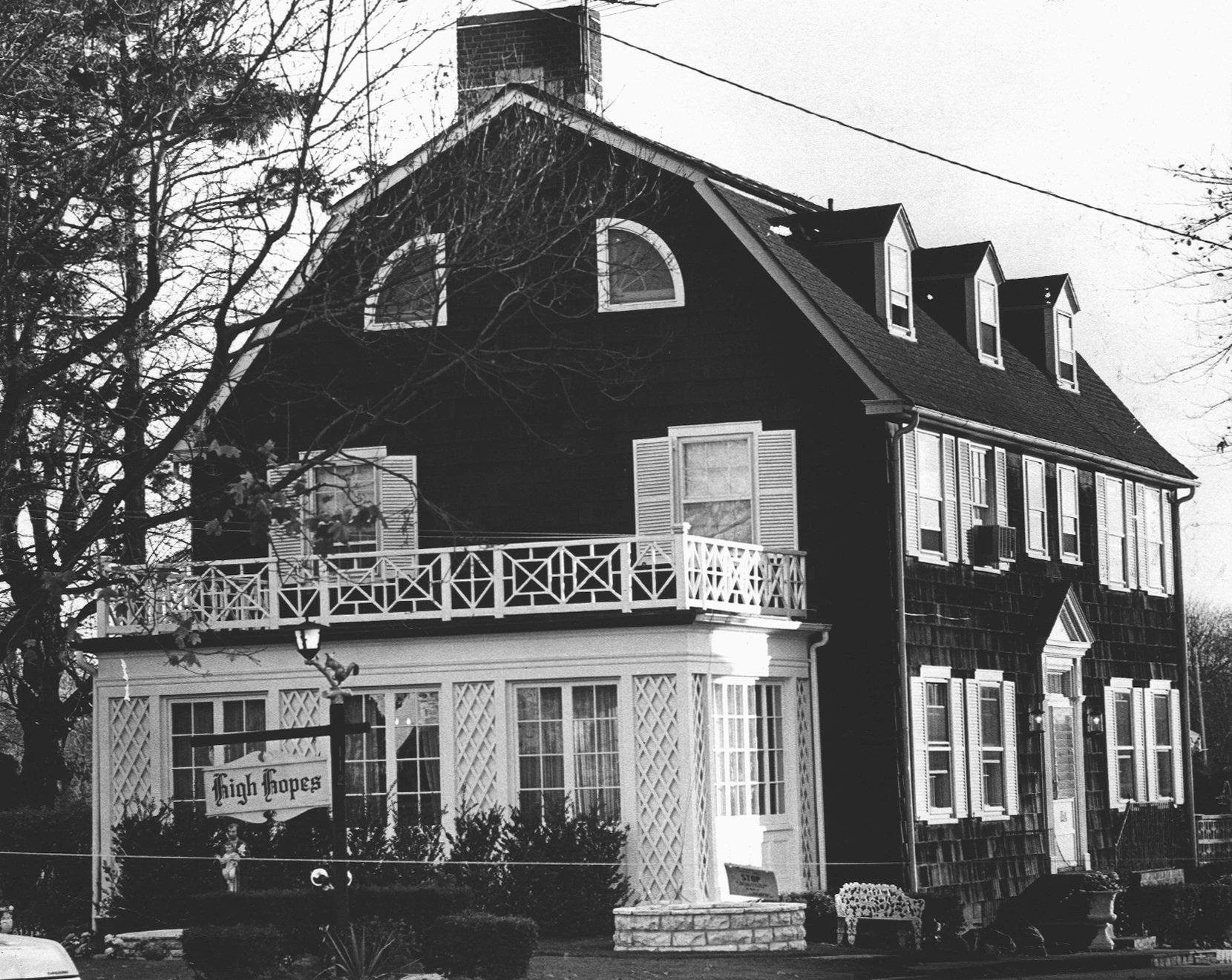
The Haunt emerges from an almost yeat-long slumber.
I don’t know if you’ve seen this or not, but Horror Vanguard put out our yearly Halloween special episode. A few years ago we decided to do something special for the first time and put out an episode that cracked the three hour mark. The following year we decided we had to try and top that, so in what can only be described as a fit of hubris, we decided to cover the Halloween franchise. Yes, all of them. I remember at the time thinking: “no-one is going to listen to this,” and yet I was almost immediately proven wrong. It’s been one of the most consistently popular episodes ever since we first released it. And so, we came to this year – how do we top the Halloween franchise retrospective (which was, for the record, just under nine hours long).
Well. See for yourselves.
In total it’s around twenty five hours long and involves us covering eighty films. It is essentially six months of a podcast done at once and it’s been one of the biggest most logistically complicated things I’ve done over the past month (but doubly so for Ashley, who not only kept the whole thing running on time while we recorded it, but then also edited the whole thing in four days, an achievement that leaves me genuinely in awe.) So, please do go and listen – I can’t help but disclose that I thought the same thing recording this Amityville franchise retrospective as when we recorded the Halloween episode. “No-one is going to listen to this. It’s just way too long.” Already I’ve been proven wrong, as it seems people are genuinely excited (albeit pretty concerned for our well-being). I’ve even been sent a nice message from the director of Amityville Christmas Vacation who listened to the podcast, which was very kind of them, but did leave me hoping that some of the other directors involved would choose to give the episode a miss as we are not…totally complimentary about their work.
Anyway, having spent the last two or three weeks essentially shotgunning Amityville films into my brain, I thought a brief coda or postscript might be in order. For people who aren’t aware, the Amityville films start with a horrific real crime. In November 1974, Ronald De Feo Jnr. shot and killed six members of his family at 112 Ocean Drive, a large Dutch Colonial house in the small town of Amityville in the south of Long Island, New York. A little over a year later, George and Kathy Lutz move in and move out less than a month later claiming to have experienced various supernatural phenomena. This catches a zeitgeist of sorts and the American writer Jay Anson writes a book, after the Lutz’s grant him the rights. He released the book in 1977, and it is sold as being “based on a true story.” (Though the debates about veracity would roll on for decades and lawsuit after lawsuit after lawsuit) The almost inevitable movie adaptation comes in 1979, starring James Brolin playing George, Margot Kidder as Kathy and the late, great Rod Steiger as a local parish priest.
What’s noticeable about the movie is the degree to which it grounds itself in the economic circumstances of the family. George and Kathy are Catholic, with a large family. The house is $80,000, which, as Kathy remarks, “may as well be $800,000.” When the couple hire a caterer, he asks for cash when George offers to pay with a cheque. As the caterer says: “I don’t like checks. Let me tell you something about checks. Checks get cancelled. Checks bounce. Checks is not cash. Cash is cash.” George and Kathy literally cannot afford to leave the house – an economic reality underscored by the fact that George consistently complains about getting nickle and dimed by the IRS, the insecurity of his contract work and the financial precarity of their situation. All of this leaves Kathy shouldering the brunt of the unpaid domestic and reproductive labour of maintaining the domestic space and the family unit. In a sense, Kathy going to the priest can be read in materialist terms – she’s literally trying to keep her home together.
The film’s most revealing line comes as Kathy asks George about the gory history of the house and George responds that “houses don’t have memory.” But of course they do – memory is the thing which makes a house into a home – it’s only through its place within a network of social relationships that houses can be both fungible commodities and the site of some degree of ontological security. Houses have memory but paradoxically, George’s comment is born out as true by the development of the franchise as a whole. In short, the Amityville films post 1979 are attempts at cinematic forgetting, driven by various economic incentives, Amityville is, after all, a real place and so can’t become intellectual property and so that means you can slap the name onto any low, no or micro budget horror film and squeeze out some distribution. Houses don’t have memory and neither, it turns out, does Tubi.
The development of the franchise is essentially a process of abstraction – the subsequent films move from the East Coast out to California before being absorbed into the low budget and indie film making scenes of America more generally. The house stops being a real place and as the films unfold, it turns out that every single house in America is the Amityville house, every house has within it the placeless place that is haunted and cursed. This starts with the commitment to cursed objects – to the clock from the house, the old toys, even the very floor timber carries within it some particular residue of evil. If the haunted house is, as a rule, about architecture, space and relationships, then the progression of the film series can be read as demolishing the specific architecture of one place to make films about the nature of property itself. The final stage of abstraction is that Amityville becomes nowhere and everywhere and the films no longer point out to anything else other than their own intertextuality.
It becomes a running joke that the films are bad and point only to other bad films, constructing a cinematic architecture that has no outside, no externality, no referent that isn’t another lawyer of abstraction. As a model of how American cultural production mirrors developments in American capitalism I think it’s deeply instructive – there isn’t a way back to a non-abstract sense of the commodity in contemporary America. All there is, are endless permutations of recombination – Amityville Bigfoot, Sharknado, etc etc etc self-generating feedback loop that always seeks the easiest and quickest ROI and you don’t get through commodities, you get through rent and services. Only one way out of this – we have to blow it up.

 thelitcritguy
One thought on “Amityville Postscript”